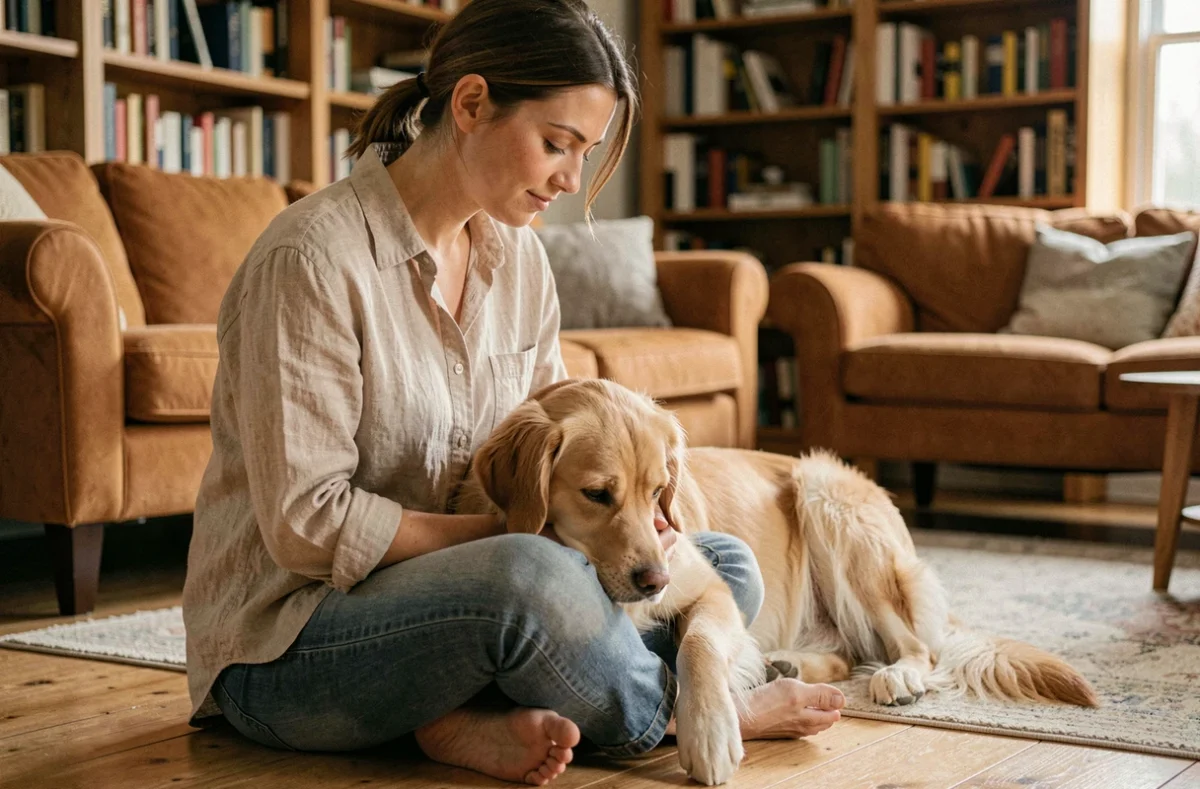
A dog that turns its head away when you stare at it isn’t sulking. It’s sending a coded calming signal to put an end to an interaction it perceives as pressure. Mistaking this gesture for indifference means missing an entire part of canine communication and, in turn, weakening the bond you share every day.
Calming signals and canine micro-expressions: what your dog’s posture is really telling you
Calming signals (turning the head away, licking the nose, yawning when not tired, freezing) form the foundation of canine body language. Their purpose is to defuse potential conflict, whether the other party is another dog or a person.
A common problem is selective interpretation. Owners easily notice a growl or a wagging tail, but overlook the subtler signals that come first. A dog licking its lips while staring at the hand approaching its food bowl isn’t savoring its meal in anticipation: it’s expressing discomfort.
Three micro-expressions to watch for in particular:
- Averting the gaze combined with pinned-back ears signals moderate stress. Continuing the interaction at this point can push the dog toward more pronounced responses (growling, abruptly moving away).
- Repeated yawning in a calm setting (not after waking up or exercising) indicates internal tension. We often see this signal in veterinary waiting rooms or when a dog is in a new environment.
- A dog shaking as if wet when it’s actually dry is releasing emotional overload. This physical “reset” often occurs after a tense interaction or an unfamiliar situation.
You don’t need extensive training to decode these signals. Simply observe without intervening for a few minutes each day in different situations (mealtimes, walks, rest), and note recurring sequences of gestures. This is what builds a reliable relationship with your dog—far more than piling on commands.
The behavior guides offered by Attitude Canine’s dog profiles detail these sequences for several breed types, helping you distinguish a temperament trait from a sign of distress.
Sharing the power of scent: turn walks into a cognitive activity
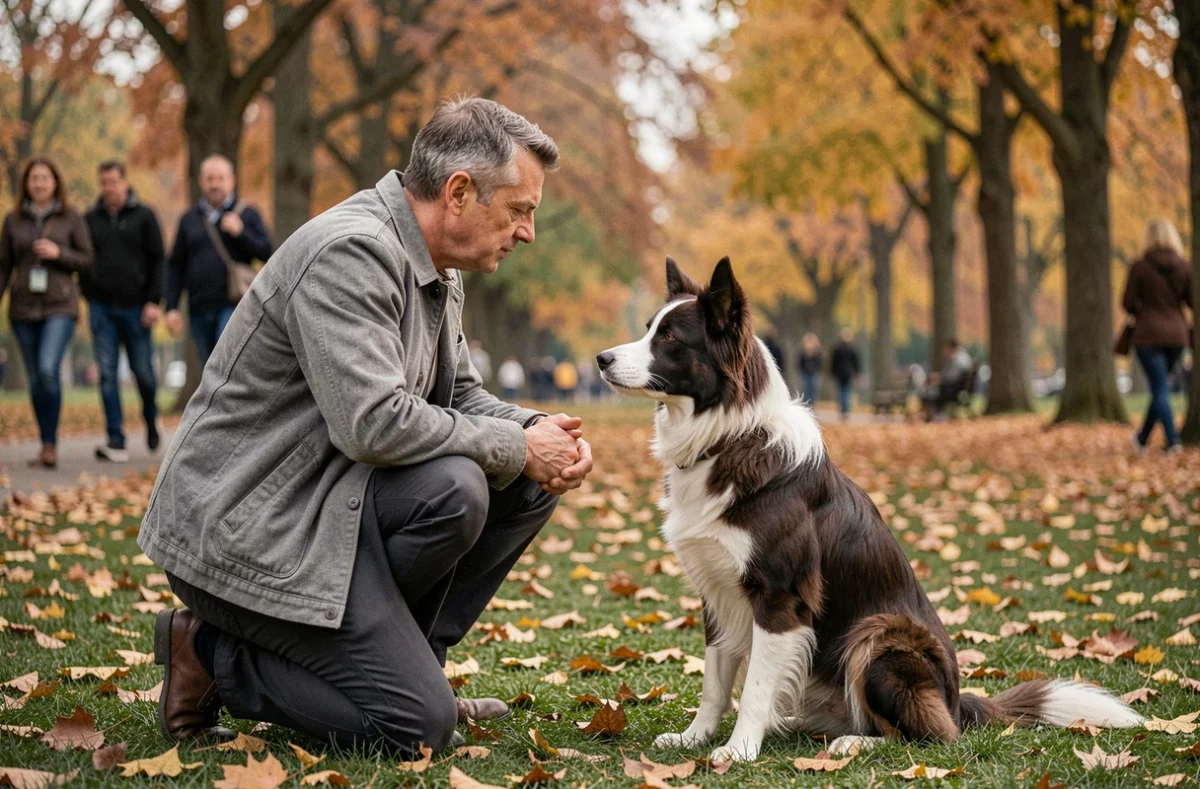
A typical walk (a straight route, a human-paced stride, a short leash) underuses a dog’s primary sense. Smell isn’t just a recreational bonus: it’s how dogs map their surroundings, identify other dogs, and regulate their level of excitement.
A 2025 Finnish study of search-training groups described how dogs, people, terrain, and wind interact to create reciprocal learning. The handler learns to read changes in the dog’s posture (slowing down, nostrils pointing in a particular direction, tail held low in concentration), while the dog adjusts its tracking strategy in response to the handler’s body language.
Scent work becomes a shared activity, not a need to be tolerated on the leash. In practical terms, setting aside fifteen to twenty minutes once a week for a search activity (hidden treats in a park, a scent trail laid out in a garden) changes the dynamic between you. The dog looks to its owner more often—not because of conditioned obedience, but because the pair shares a common goal.
Scent work: common setup mistakes
Constantly guiding your dog verbally toward the target defeats the purpose of the exercise. The dog needs to solve the problem on its own, even if it goes around in circles. Stepping in too soon creates dependence on human cues and undermines the dog’s confidence.
Another pitfall is starting with difficulty levels that are too high. Begin in a small area with little wind, then gradually increase the distance and the complexity of the terrain. A dog that fails several times in a row will give up and lose motivation.
Owner stress and canine behavior: a documented link through scent
The idea that dogs can “smell” our emotions goes beyond simple anthropomorphism. A 2024 study published in Scientific Reports exposed dogs to the scent of stress from unfamiliar people. The result: the dogs were more cautious when approaching a food bowl, particularly during the final session of the protocol.
Methodological caution is warranted: the effect was not observed consistently across all sessions. It would therefore be excessive to conclude that every episode of stress at home affects a dog’s behavior. What the research does show, however, is that an owner’s emotional state can influence a dog’s decisions even without visual cues.
In practice, a stressed owner who repeatedly calls their dog back in an irritated tone during a walk is sending two negative signals: a tense voice and, potentially, an anxiety-inducing scent. The dog isn’t disobeying out of defiance; it’s hesitating because the information it receives is contradictory.
Dog training and bonding: why setting boundaries strengthens your relationship
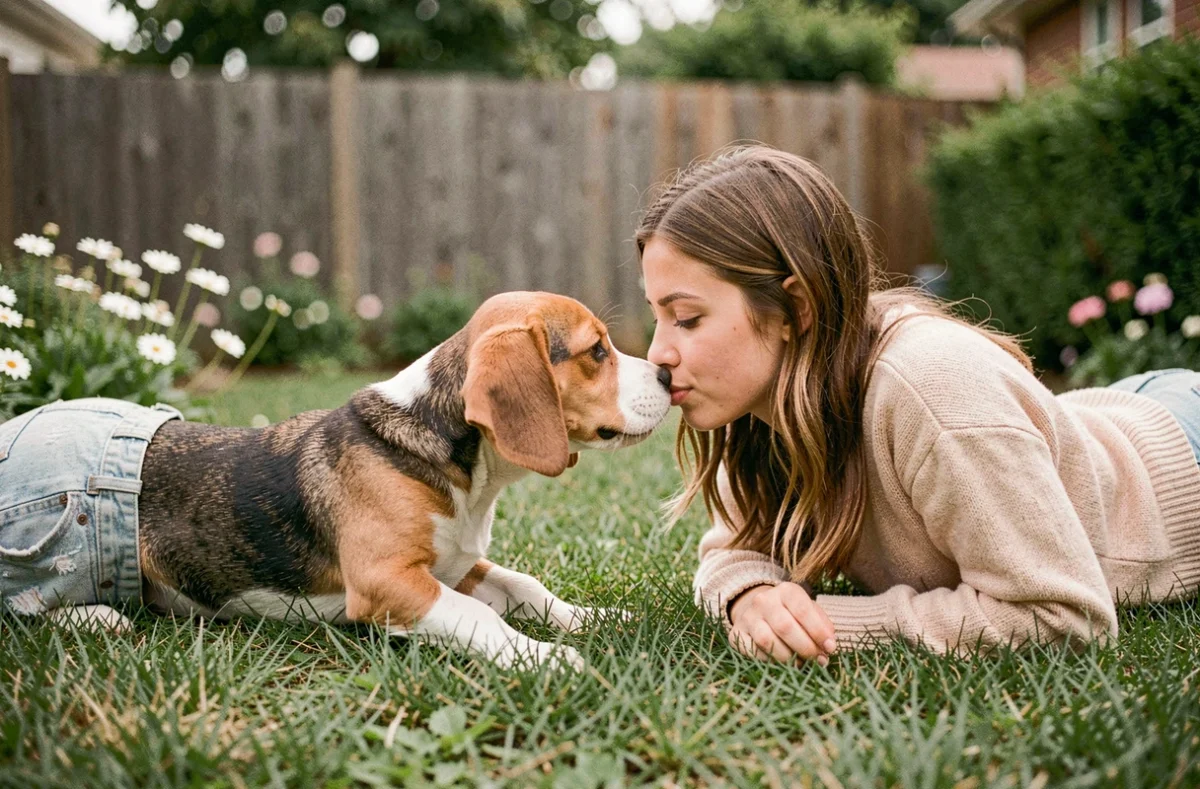
Clear behavioral boundaries don’t get in the way of a close bond. Dog behaviorist Julie Paucot points out that dogs never deliberately make life difficult for their owners: they act based on what they understand and what they’re offered.
A dog that pulls on the leash often needs clearer rules at home, not more walks. Consistent boundaries indoors (waiting before going through a door, not jumping on guests) carry over directly to the outdoors. Eye-contact exercises illustrate this principle—for example, throwing a toy and waiting for the dog to look back at its owner before letting it go and fetch it.
The difference between emotional reactivity and understanding
A 2024 study published in Animal Cognition showed that dogs could distinguish genuine human emotions and adjust some of their behavior accordingly. The authors stress that this is not enough to demonstrate empathy in the strict sense. A dog responds to emotion; it doesn’t “understand” it the way a human would.
This distinction changes how we interact with dogs. Rather than expecting a dog to “sense” our sadness and come to comfort us, it’s better to maintain stable routines (walk times, play sessions, respecting rest time) that provide a predictable framework. A close bond is built on this predictability, not on projecting human emotions onto a dog.
The bond between a dog and its owner depends less on how much time they spend together than on how well they understand each other. Observe before intervening, cooperate rather than direct, and accept that dogs process information differently from us: these are the three foundations of a deeper relationship.