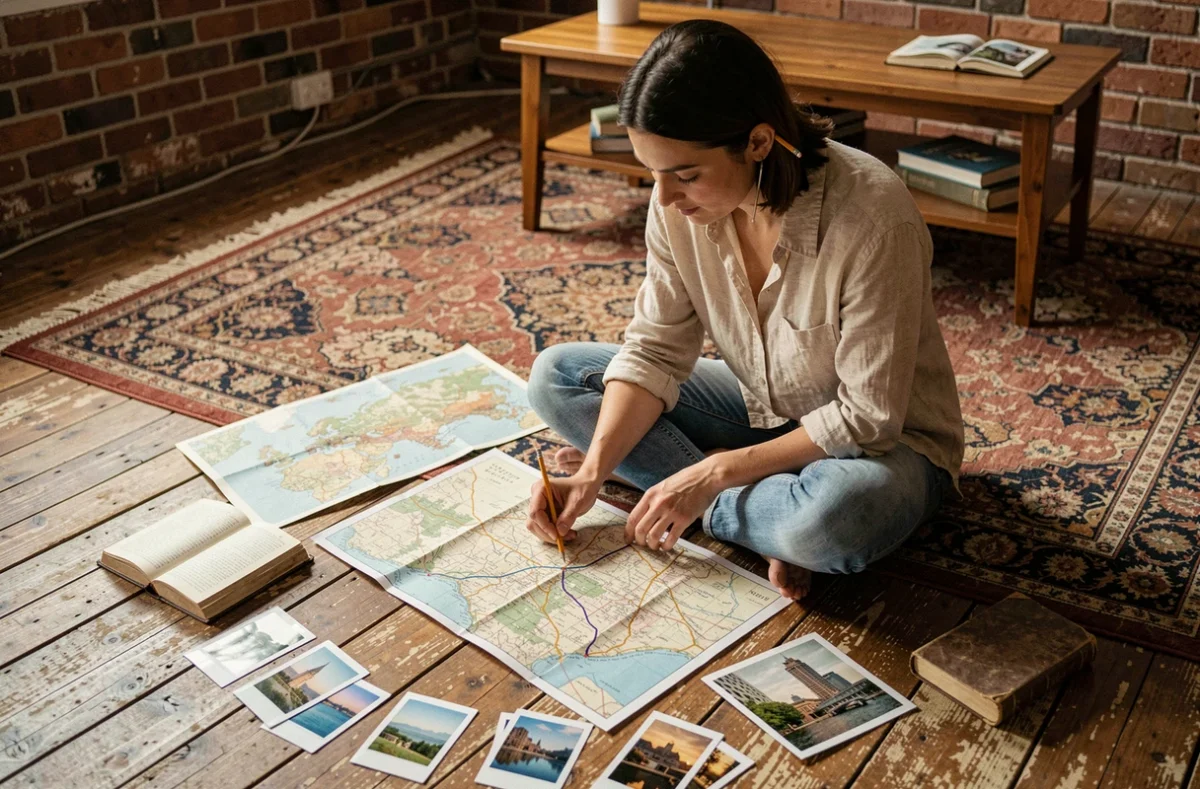
Customizing a trip in images is not just about stacking photos in a folder. The work begins well before departure, with a choice of visual storytelling that determines the quality of the final output, whether it be a digital journal, a personalized map, or a structured photo book.
Visual Travel Storytelling: Building a Narrative Thread Before Shooting
A successful personalized travel journal relies on a clearly defined editorial line established in advance. Without it, photos accumulate without logic, and the result resembles a disordered Instagram feed.
We recommend setting three parameters before departure: the dominant theme (architecture, gastronomy, portraits, landscapes), the ratio between posed images and candid shots, and the number of narrative stages that the final story will include. A ten-day itinerary does not produce ten chapters; it produces four or five, centered around key moments.
This prior segmentation also prevents overproduction. Returning with several hundred shots without a sorting grid turns the creative phase into a chore. It is better to frame the photographic intention step by step and stick to it.
If the approach of designing the trip in your image with Voyager en Images interests you, it is precisely this step-by-step customization logic that makes the difference between a generic album and an object that tells your story.
Personalized Map and Visual Itinerary: Tools and Method
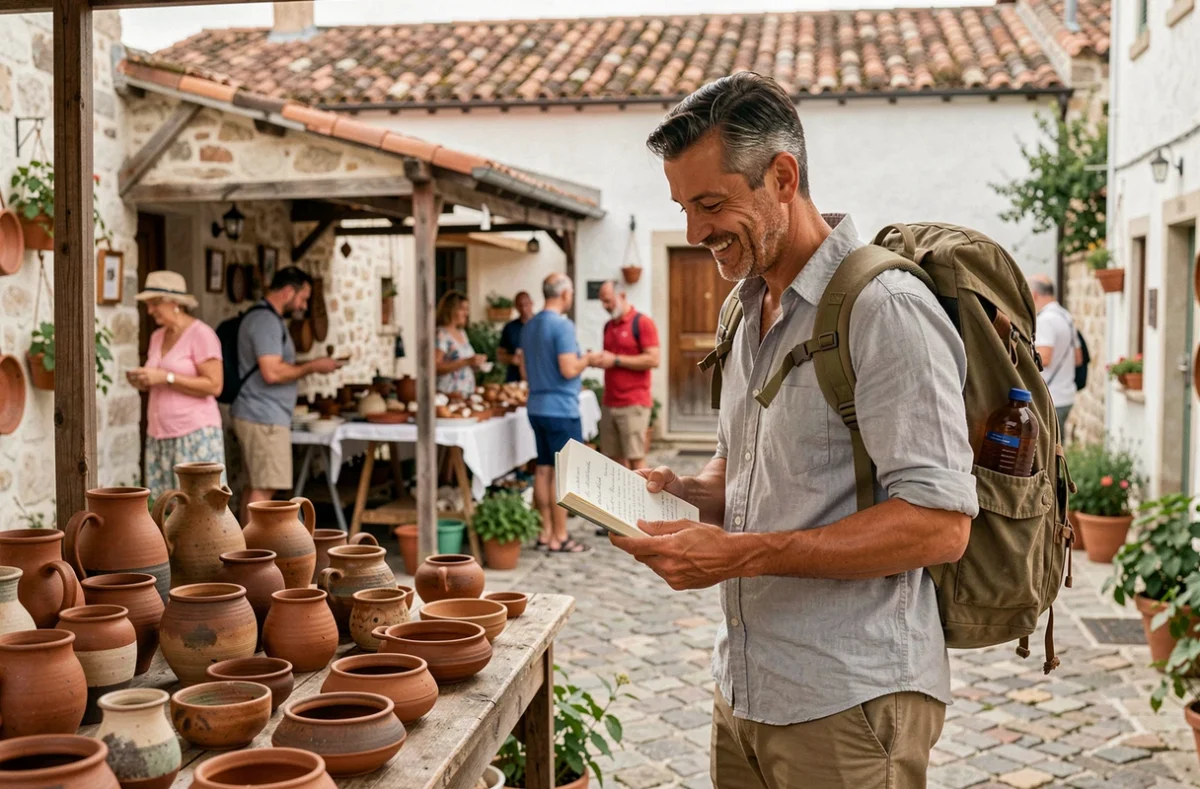
The personalized itinerary map has become a central element of visual travel narratives. It serves both as a planning tool and a graphic support in the final output.
Choosing Between Automatic Routing and Manual Drawing
Online planners generate a GPS route based on the entered stages. The result is precise but visually standardized. For a journal or a poster, a redrawn route on a stylized map background produces a more personal result.
Tools like Canva allow you to import a map background and overlay icons, annotations, and thumbnail photos. Customizing the route according to the mode of transport (road, train, flight) adds a layer of information that is easily readable at a glance.
Integrating the Map into the Narrative
The map should not be an isolated decorative element. It functions as a visual table of contents. Each marked point on the itinerary refers to a section of the journal or a series of photos. This link between mapping and photographic content gives the reader a dual entry into the narrative: geographical and chronological.
Transparency of AI-Generated Images in a Travel Journal
Mixing real photos and AI-generated visuals in a travel narrative raises a transparency issue. Article 50 of the European regulation on artificial intelligence imposes reporting obligations for synthetic content that could be mistaken for authentic representations.
The regulatory distinction is clear: a simple edit (cropping, exposure correction) does not trigger an obligation. However, a generated visual representing a real place, person, or object falls into the category of content subject to reporting.
For a travel journal creator, this entails three concrete precautions:
- Clearly identify in the journal the images produced by a generative AI tool, even if they are used solely as mood illustrations
- Distinguish the role of the tool provider (who must make the content machine-detectable) from that of the creator who deploys the tool in their personal or professional project
- Avoid presenting a synthetic visual as an authentic travel photo, which is precisely the scenario targeted by regulations on deepfakes
This regulatory framework is recent. The transparency obligations also apply to content shared on social media, not just to commercial publications.
Creating a Travel Photo Book: Structuring Content for a Lasting Result
The photo book remains the most refined format for transforming a stay into a tangible object. The quality of the result depends less on the number of photos than on their arrangement.
Selection and Sequencing of Photos
A rigorous sorting eliminates duplicates and photos without narrative value. The basic rule: keep one photo per key moment, not one per hour. An effective travel book rarely contains more than a few dozen images for a week’s stay.
The sequencing follows the narrative logic defined in advance. Alternating wide shots (landscape, architecture) and close-ups (details, textures, dishes) creates a visual reading rhythm. Interspersing pages of short text, excerpts from notes taken on-site, or anecdotes adds depth to the narrative.
Complementary Texts and Graphic Elements
Writing in a travel photo book is not intended to be literary. Factual captions (place, date, context) are sufficient to anchor each image. Route maps, scanned tickets, or screenshots of GPS paths add a documentary dimension that the photo alone does not carry.
- Prefer a paper weight dense enough to avoid transparency between pages
- Opt for a lay-flat binding if the book contains panoramic photos on double pages
- Reserve the cover for a strong and readable image in small format, not for an overloaded collage
A personalized travel photo book is best finalized in the weeks following your return. The longer the time passes, the more contextual memories fade, along with the ability to write precise captions and accurate anecdotes.