No standard dictates the minimum thickness of tulle for a wedding dress. Yet, some fashion houses impose their own standards, sometimes drastic. Synthetic tulles, while dominating the market, remain persona non grata in certain prestigious collections, where silk or cotton, rarer materials, take center stage.
The robustness of a tulle does not only depend on the fineness of the thread or the density of the weave. Careful treatments, rarely specified by manufacturers, also come into play. The true secret lies in the art of cutting and assembling. The label may promise wonders, but in reality, it is the seamstress’s know-how that makes all the difference.
Tulle, the fabric that transforms the wedding dress
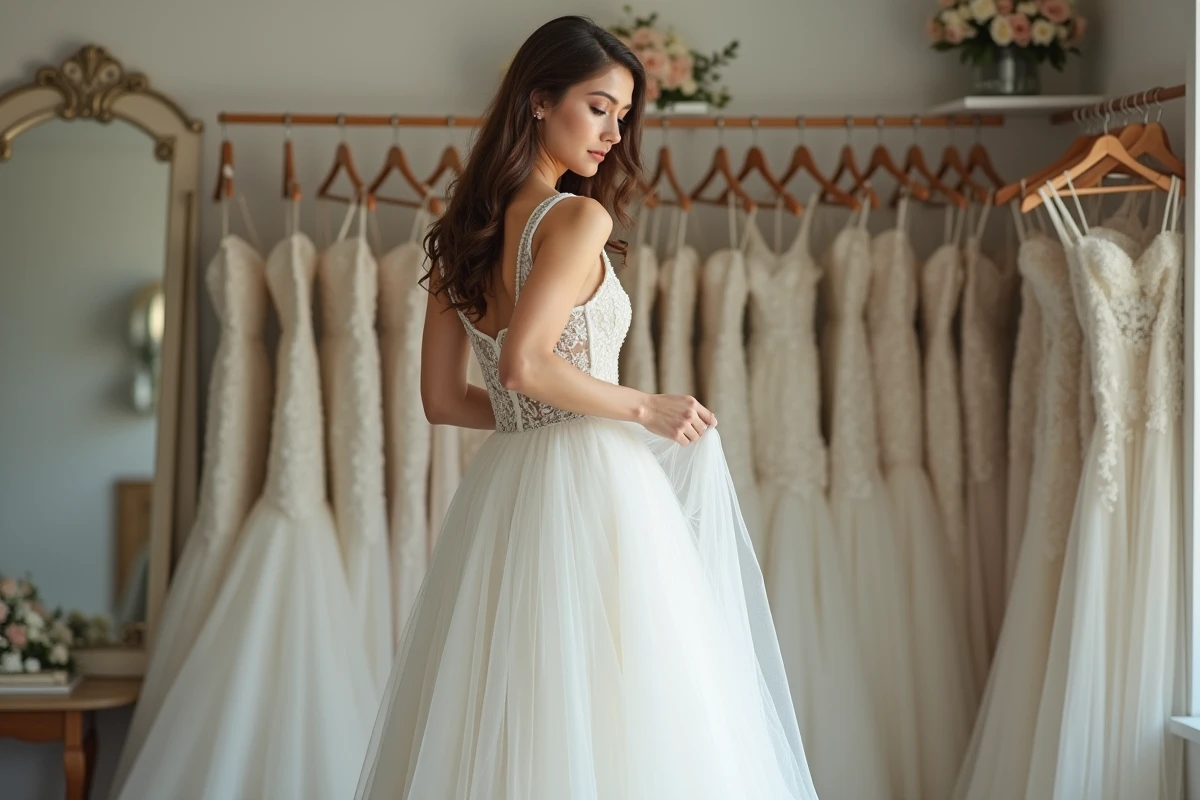
From the first sketches, tulle establishes itself as an essential element of wedding dresses. So light it seems to disappear, it structures the silhouette while giving it a delicate, airy, almost ethereal touch. It’s all about dosage: a skirt surrounded by tulle floats around the body, a veil plays with light and discreetly enhances it. Soft tulle for a vaporous movement, rigid tulle for a pronounced volume, stretch, embroidered, or glittered variants to assert a strong identity, each material carries its promise of style.
The strength of tulle also lies in its ability to engage with all desires. Embroideries, pearls, lace, nothing resists it. Pure white envelops with elegance, while ivory or pink tones invite themselves to those seeking a unique look. To measure it concretely, just observe the wedding dress fittings on Cœur de Mariage: tulle adapts, accompanies every movement, and always steps back in front of the personality of the future bride.
If it remains highly favored, it is not by chance. It offers three advantages rarely found elsewhere: comfort, affordable price, distinguished appearance. Tulle suits all body types, shapes every desired volume without ever hindering the freedom to move. On a bodice, a veil, a skirt, it enhances the wedding dress while remaining discreet.
Which tulle for a unique creation? The choice and workshop secrets
The selection of the ideal tulle influences the look of the wedding dress. Between flexibility, rigidity, or elasticity, each project finds its material: a fluid tulle for a soft fall, a firm tulle for a raw cut, or a stretch tulle that hugs every shape. Colors also join the celebration: classic whiteness, soft ivory, shades of pink or skin tones, the tulle color chart offers an almost limitless playground, capable of matching the spirit of each ceremony, whether relaxed bohemian or fairy-tale grandeur.
Tulle adapts to morphology and style
To clarify, one can rely on these concrete guidelines:
- A slim silhouette gains volume without heaviness with judiciously placed vaporous tulle.
- When the line is more generous or athletic, layering several layers of soft tulle helps structure the waist, all while being gentle.
- Want to break the codes? Embroideries or sequins on tulle bring dynamism and sparkle to a contemporary model.
Embroidered tulle or tulle adorned with sequins personalizes each piece, while a solid version focuses on balance and sobriety. Throughout the fittings, professionals enjoy adjusting, testing a drape, pinning according to inspirations; tulle can be shaped at will. In terms of budget, it remains more affordable than silk or satin, allowing for generosity in volumes while ensuring a beautiful quality of finish.
For each dress, the choice of a well-crafted tulle fabric (just the right transparency, uniform touch) directly influences the final appearance. This attention to detail makes all the difference and dresses brides up to the last fitting.

Sewing and enhancing tulle: concrete tips and workshop tricks
Working with tulle requires precision at every moment. A clean cut, sharp scissors, and always a well-prepared surface: the fabric has a nasty tendency to slip, so it’s better to anticipate. To stabilize the whole, fine pins are recommended, inserted without leaving a trace. Sewing is often done by hand on fragile areas or by machine with a suitable needle and tone-on-tone thread for an invisible finish. Small stitches, meticulous gestures: the difference is evident in the drape.
From one dress to another, tulle is essential from the underskirt to the veil, including sleeves and bodices. A well-defined volume is achieved by assembling several layers, playing with length or density. The veil sometimes gains a fine rolled finish or a delicate border in lace or embroidery. To keep the tulle soft against the skin, every stitch counts.
Maintaining tulle also requires attention: hand wash in lukewarm water, no excessive rubbing, and take it to a specialized dry cleaner if the dress warrants it. To dry, prefer laying it flat and store the piece away from light, on a padded hanger in a breathable cover. A quality tulle, well-maintained, accompanies every fitting and then the big day with the same elegance.
Tulle does not simply follow trends: it establishes itself as the discreet signature, capable of transforming a wedding dress into a striking piece. Promise kept, each step toward the aisle becomes unique, carried by this material that continues to surprise with every movement.