Let me ask you a question. When you plant tomato seedlings, do you follow any “rules” or do you just plant and hope for the best?
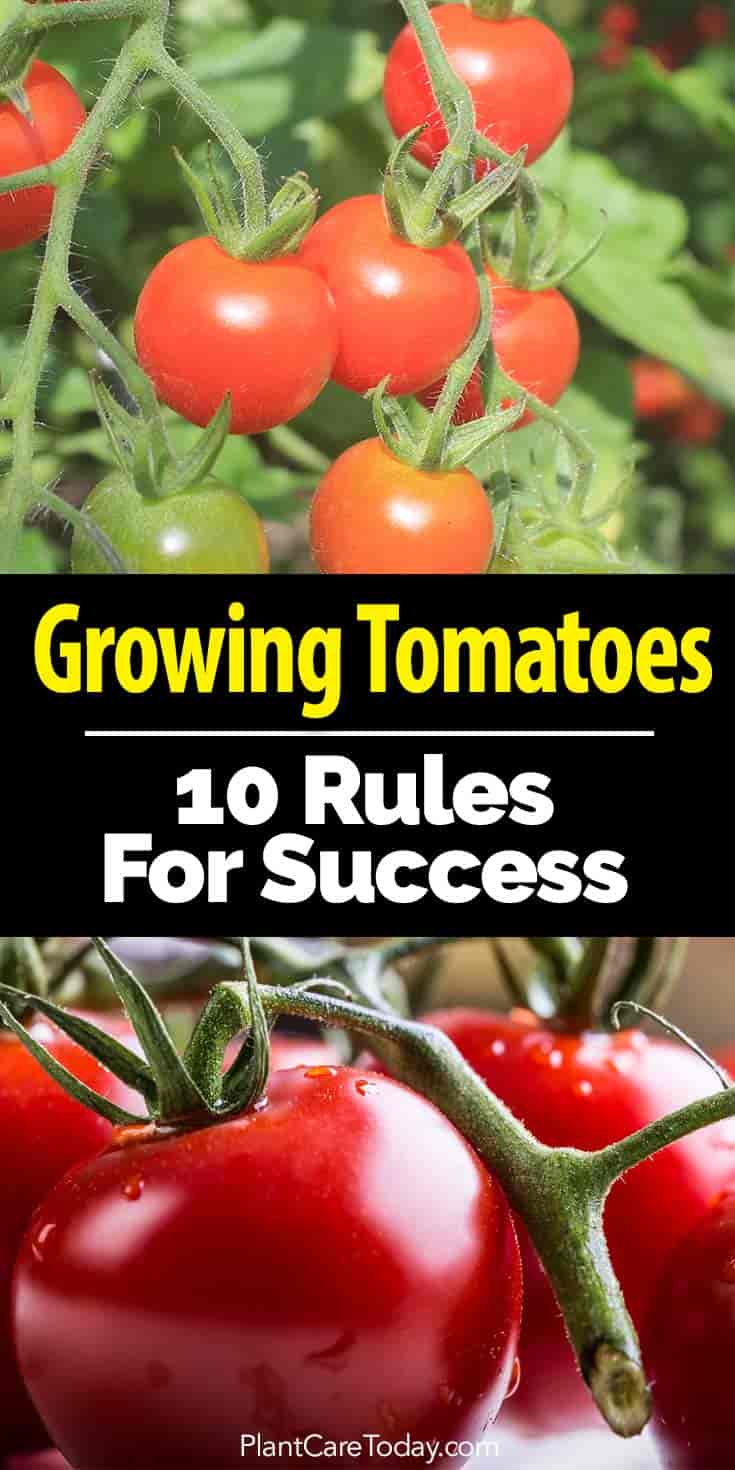
Garden tomatoes are as tasty to insects and birds as they are to us, and low-hanging tomatoes can even become lunch for terrapins!
Although many people believe that tomatoes are a foolproof crop, the fact is that you need to know a thing or two to successfully grow tomatoes.
In this article, we will share ten tips and smart techniques that many successful gardeners follow when planting their tomatoes.
[ toc]
Not following these tips and techniques are the ways of error that many gardeners make!
Hopefully, you’ll be on your way to growing the best tomatoes.
Make sure to select the right tomatoes for your growing conditions
It’s important to be realistic about the space you have. If you have only limited space or are gardening in containers, you will want to choose determinate tomatoes. These are tomatoes that only grow to a certain size.
Patio tomatoes are a good example. This type of tomato has a thicker stem that can support the weight of the plant and fruit without a tomato cage or trellis. Additionally, this type of plant never needs to be pruned as it only grows to a specific size.
If you have plenty of space, you will want to select indeterminate tomato plants. These will keep growing until space runs out.
They require a bit of attention and care because you need to stake them or place a cage around them for support. You will also need to prune the tomatoes to encourage good growth and discourage fungi.
In terms of production, indeterminate plants produce more and have a longer production season. Determinate plants are somewhat limited in the number of tomatoes they will produce and the duration of their production.
Do you “harden off” your seedlings before planting tomatoes in the garden?
You can’t just place your tomato seedlings outside in the garden and expect them to survive. They need to be gradually introduced to the elements so they can acclimate and harden off. This acclimatization process takes several days.
Start when your tomato seeds are about a month old. Set them outside for a few hours on a mild day in indirect light. They should not be exposed to rain, direct sunlight, or extreme temperatures (hot or cold) at this stage.
Give your seedlings a little more time outside each day for a week to ten days. By the end of this time, they should be hardened off and ready for life outdoors.
Make sure to provide enough space for the tomato varieties you are growing
It is very tempting to plant tomatoes close together when the plants are small.
Remember that from the time they are seedlings until they are ripe, they will put on several feet of growth both upward and outward.
If you plant these tomato cultivars too close to each other, they will not be able to reach their full potential. They will become stunted.
Each of your tomato plants should have its own tomato cage for support. These tomato cages should be placed 1.5 to 2 feet apart. This placement will give your plants plenty of room to spread and grow while being firmly supported by the surrounding cage.
Make sure to provide adequate support for each plant to prevent leaves or fruit from touching the ground. This can cause blossom end rot, which can lead to the death of your tomato plant.
The many ways you can “cage” tomatoes: video
Are you planting your tomatoes in enough sunlight?
All fruiting plants need a minimum of seven hours of sunlight each day.
Plants rely on sunlight for the photosynthesis process that nourishes the plant and helps it produce abundant amounts of fruit.
If your tomato plants do not get enough sunlight, they will be leggy and leafy; however, they will not produce a good crop of tomatoes.
Related reading: More on caring for tomato plants
Does the soil provide adequate drainage for your tomatoes?
Because tomatoes are so susceptible to fungal infection, it is very important that your tomato bed is well-drained.
Your potting soil should be light and airy, slightly acidic, and enriched with compost. A raised garden bed is ideal for tomatoes as it is unlikely that water will pool and cause root rot.
Watering tomatoes properly will improve yield!
Be sure to establish a regular watering schedule for your tomato plants. Provide a few inches of water once a week directly to the soil when the sun is out.
Avoid spraying the leaves, as this can cause tomato blight and blossom end rot. You want to try to keep your tomato leaves and main stem dry and the soil well-drained under the plants moist.
A soaker hose is a good investment for your tomato patch.
Are you providing the right amount of fertilizer for your plants?
It is just as harmful to let nutrients build up excessively in your soil as it is to deplete them excessively.
If you provide too much fertilizer, nitrogen can build up in the soil and cause your tomato plants to produce lots of beautiful leaves but no tomatoes.
When shopping for fertilizer, make sure to buy types that are specially made for tomato plants. Alternatively, use only fully natural compost.
Recommended reading: How to read fertilizer numbers
Reasons why you should regularly prune your tomatoes
Indeterminate tomatoes need to be pruned from time to time because when they are overcrowded, disease and fungi can run rampant.
The reason is that water tends to accumulate in crowded plants. You should regularly prune to ensure good air circulation to keep your leaves and stems dry.
Additionally, when you do not prune your tomato plants, they consume a lot of nutrients that you provide to grow leaves instead of tomatoes. That’s not what you want!
Be sure to prune the larger suckers to produce more and more fruit.
Keep an eye out to quickly and properly treat early blight
Early bacterial blight is a fungal infection that hits tomatoes particularly hard. As mentioned, the fungus can be the result of overcrowding.
If you notice damaged (shiny) leaves on your tomato plants, you need to prune them. Be sure to sterilize your scissors after pruning to avoid spreading the disease from one plant to another.
Always keep an eye out for early blight (leaf browning).
It first appears on the lower leaves and moves up the plant. If you are not diligent, you may not notice it. Keep a vigilant eye, prune as necessary, and use an organic fungicide to discourage the development of the outbreak.
If you have problems with early blight one year, do not plant tomatoes in that area the following year. The reason is that this fungus can survive in the soil throughout the winter.
Aside from that, it is always wise to rotate your crops so that your soil is not completely depleted of a given nutrient.
Make sure to control tomato hornworms
A tomato hornworm infestation can devastate your entire crop. Keep an eye out for these caterpillar invaders.
When you see them, hand-pick them and dispose of them properly to prevent them from coming back.
While it may be tempting to spray your tomato plants with insecticide to kill the green tomato worms, try to resist that temptation.
Remember that the tomatoes produced by your plants will also be affected by this insecticide, and so will you! Additionally, the insecticide kills insects, including bees, butterflies, and praying mantises that feast on pests and other beneficial insects.
Plant a wide variety of tomatoes to have fruit ripening at different times
It is smart to plant several different varieties of tomatoes that ripen at different times. This way, you will not be overwhelmed with a mono-harvest of tomatoes all at once.
Instead, you will have a selection of different types of tomatoes throughout the growing season.
Different types and sizes of tomatoes are better suited for a variety of purposes.
For example, beefsteak tomatoes are best suited for slicing on sandwiches, while cherry tomatoes are perfect for snacking.
Plum tomatoes are great for cooking, and Cherokee Purple makes a colorful and flavorful addition chopped into a salad.
Good care gives good tomatoes
When it comes to garden vegetables, tomatoes are quite easy to maintain; however, it is important that you follow a few guidelines to achieve the best results. Refer to the ten practical tips presented here to plan, plant, and harvest your tomato patch!
 Read more at lejardineur.net