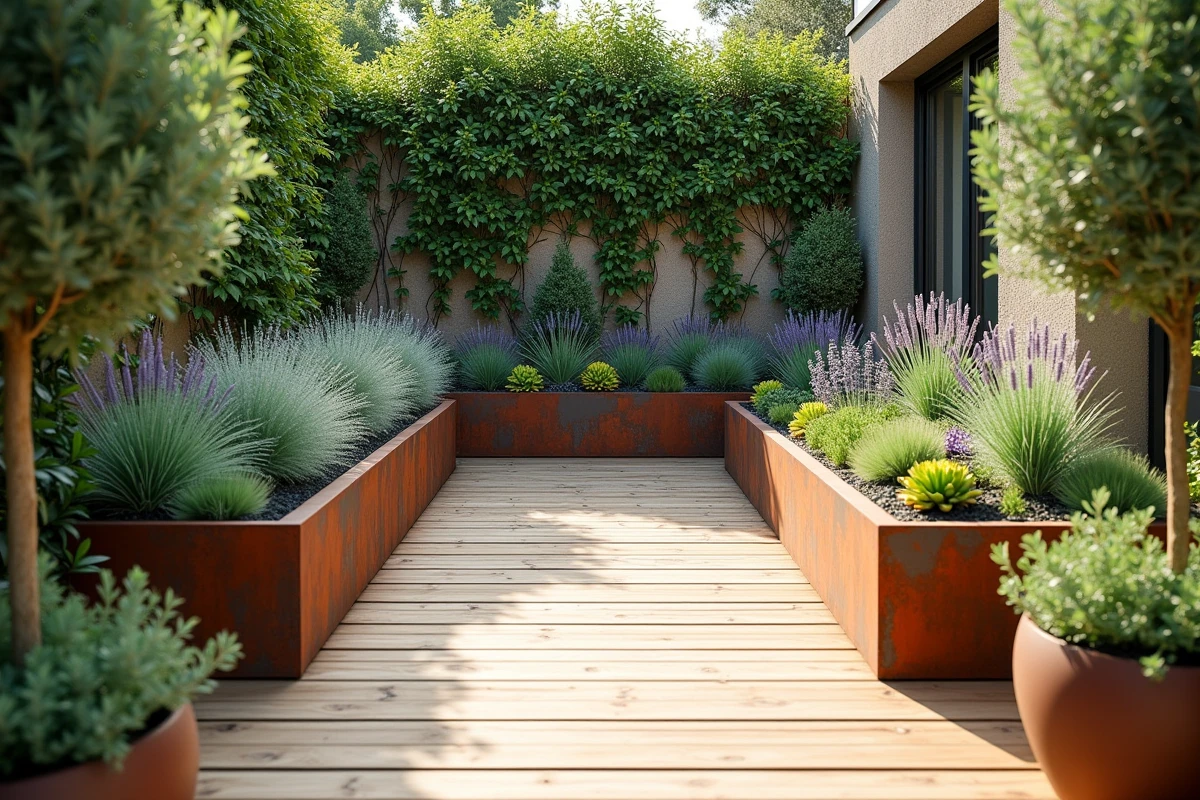
A garden that works well does not look like the neighbor’s. It responds to a specific soil, a local climate, and daily uses. Current trends in garden design do not propose a single model, but adaptable design principles: resilience to drought, space for wildlife, areas that serve multiple functions. Understanding these principles allows for the creation of a harmonious garden without replicating a catalog.
Living soil and sustainable mulching: the foundation of a resilient garden
You may have noticed that a mulched bed stays moist for several days after rain, while a bare flowerbed dries out in a few hours? This simple mechanism conditions the entire subsequent layout.
Organic mulching (wood chips, dead leaves, hemp straw) protects the soil from evaporation, nourishes microorganisms, and limits the growth of weeds. A permanently covered soil becomes softer, richer, and requires less watering. This is the starting point for a water-efficient and low-maintenance garden.
This approach goes beyond mere practical action. Recent recommendations from ADEME and the French Office for Biodiversity encourage reducing mineral surfaces (gravel, concrete, slabs) in favor of permeable and vegetated soils. Professionals like those listed on perspectives-jardin.fr integrate this logic from the design phase, working on the soil before thinking about plants.
The difference between a garden that survives dry summers and one that exhausts itself often lies in this layer of organic matter, applied at a sufficient thickness and renewed each year.

Drought-resistant plants: beyond the Mediterranean style
When we talk about resilient plants, we think of lavender, olive, rosemary. The reflex is logical but reductive. Resistance to drought is not limited to southern species.
Perennials like yarrow, sedum, nepeta, or euphorbia can withstand prolonged periods without watering, even in oceanic or semi-continental climates. They fit into mixed beds, alongside ornamental grasses that add movement without requiring water.
Creating a resilient bed in three layers
A bed that lasts relies on a layering logic. Here is a structure that works regardless of the region:
- A low layer of persistent ground covers (thyme, helianthemum, sedum) that protects bare soil and limits weeding.
- An intermediate layer of perennials with staggered flowering (gaura, shrub sage, yarrow) that ensures visual continuity from spring to autumn.
- A high layer of grasses or shrubs with low water needs (miscanthus, perovskia, buddleia) that structures the volume of the bed.
This principle of layering creates a dense and lively garden, where each plant has a role. A well-structured bed requires less maintenance than a lawn mowed every week.
Multifunctional design: one garden space, multiple uses
The most striking trend in garden design concerns how we think about space. A relaxation corner can also be a cool oasis. A raised vegetable bed can serve as a visual barrier between two areas.
This approach, sometimes called “multifunctionality,” involves assigning at least two functions to each area of the garden. It responds to a simple constraint: most plots are limited in size, and every square meter must count.
Concrete examples of dual-use areas
A fruit tree planted near a terrace produces fruit, but it also provides natural shade in summer. With a bench placed underneath and some ground-covering perennials at its base, you create a relaxation space without adding a pergola or shade sail.
A wooden or dry stone wall, placed at the edge of a vegetable garden, serves as a border, extra seating, and shelter for beneficial insects. The choice of material matters: dry stones and untreated wood promote biodiversity, unlike smooth concrete.
This type of thinking avoids accumulating furniture and added structures. The garden gains coherence because each element contributes to the whole.
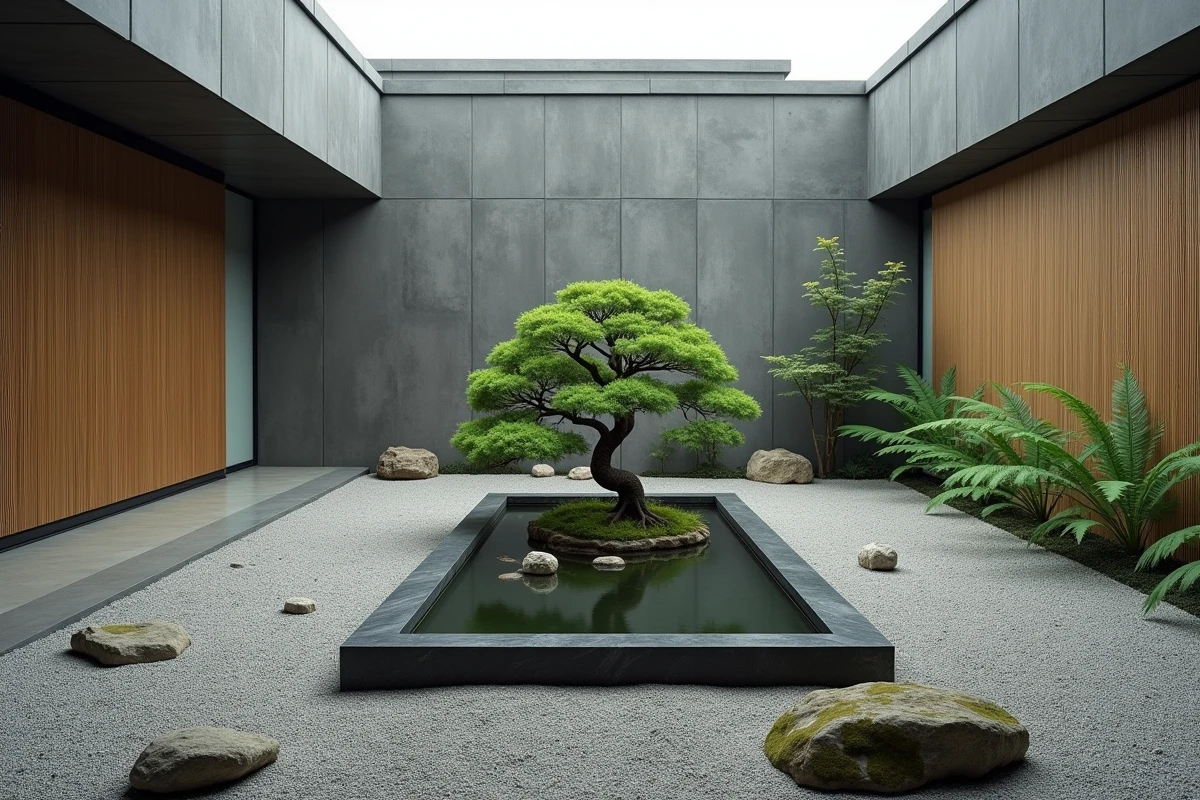
Biodiversity in the garden: concrete actions that change the ecosystem
Leaving a pile of dead wood in a corner, not mowing a strip of grass in May, planting a varied hedge instead of a uniform thuja: these choices may seem anecdotal. Their cumulative effect transforms a garden into a functional habitat for local wildlife.
The French Office for Biodiversity recommends diversifying plant layers and limiting close mowing. This means accepting that a harmonious garden may not be a “clean” garden in the traditional sense. An unmown flowering meadow area shelters pollinators, natural aphid predators, and nesting birds.
Materials and arrangements favorable to wildlife
- Hedges composed of at least three or four different local species (hawthorn, dogwood, elder, wild privet) to provide food and shelter over multiple seasons.
- Shallow water points (saucers, miniature ponds) placed in the shade, accessible to birds and insects.
- Open passages at the bottom of fences to allow hedgehogs and small mammals to move between neighboring gardens.
A garden that welcomes wildlife naturally regulates pests and reduces the need for treatments. This direct benefit more than compensates for the less “tidy” appearance of certain areas.
Creating a unique garden does not come from accumulating decorative trends. The choices that matter are structural: protected soil, plants suited to the actual climate, spaces designed for multiple uses, and room left for life. These decisions, made from the design phase, give a garden its long-term coherence.