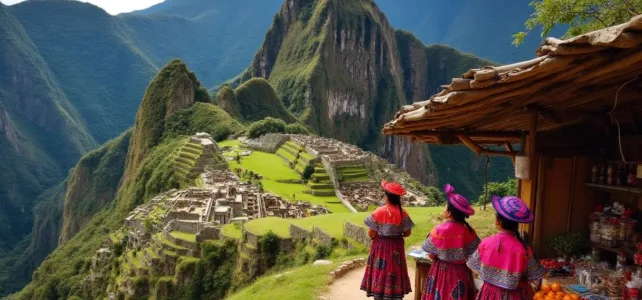
Nestled majestically in the Peruvian Andes, Machu Picchu attracts thousands of visitors each year, eager to contemplate the remnants of one of history’s greatest civilizations. This archaeological site, shrouded in mysteries and fascinating stories, is also the stage for a powerful and capricious climate that directly influences the experience of travelers. Between the rainy season that splashes the landscapes with vibrant colors and the dry season that reveals the sharp contours of the mountains, the weather at Machu Picchu is a natural symphony that every explorer must understand.
The Seasons of Machu Picchu: Torrential Rains and Brilliant Sun
To grasp the climate of Machu Picchu, it is essential to clearly distinguish its two main seasons: the rainy season and the dry season.
- Rainy Season: from November to March, Machu Picchu is regularly drenched by heavy showers. The torrents swell, the vegetation flourishes, and the site takes on the appearance of a lush jungle. Despite the precipitation, the site is less crowded, offering a more intimate experience of the citadel.
- Dry Season: from April to October, rain becomes rare and the sky adorns itself in a brilliant blue. The trails are more navigable, and the panoramic views of the surrounding mountains are breathtaking. This is the preferred time for hikers, although tourist traffic is significantly higher.
Temperatures: A Game of Contrasts Between Day and Night
Machu Picchu, located at over 2,400 meters above sea level, offers a mountainous climate where temperatures vary significantly between day and night. The mercury can reach 20 to 25 degrees Celsius during the day, a warmth tempered by the Andean breeze. However, once the sun sets, temperatures drop and can fall to around 5 degrees Celsius, a transition that often surprises unprepared travelers. It is therefore advisable to dress in layers to easily adapt to temperature changes. This thermal variation is an integral part of the charm and mystery of the site.
The Impact of Climate on Flora and Fauna
The weather at Machu Picchu plays a determining role in the exceptional biodiversity surrounding the site. The wet season encourages the flourishing of flora, with over 2,000 species of plants, including many rare orchids, transforming the landscape into a true botanical garden. Animals like the famous llama, symbol of the Andes, find a perfect habitat here. The dry season, on the other hand, sees reduced animal activity, but the cleared trails allow for the observation of endemic species in their natural environment.
Practical Tips for an Optimal Visit
To fully experience Machu Picchu, it is recommended to adopt a strategic approach to preparation. Whether during the rainy or dry season, it is crucial to equip yourself properly.
- Rain Protection: bring a rain poncho and waterproof clothing during the rainy season to stay dry.
- Sun Protection: even in the dry season, the high-altitude sun is intense; a hat, sunglasses, and sunscreen are essential.
- Appropriate Clothing: prioritize layered clothing to easily adapt to temperature variations throughout the day.
- Solidarity Travel Peru: to enrich your experience, consider a solidarity travel Peru that will allow you to discover other facets of the country while supporting local communities.
Machu Picchu, with its unique climate, offers much more than just a tourist adventure. Through its seasons, varied temperatures, and flourishing biodiversity, it unfolds a true climatic symphony that resonates with the soul of every traveler. For those who prepare adequately, this journey to the summit of the Andes becomes an unforgettable memory. Understanding the weather at the site is the key to fully appreciating the majesty of this masterpiece of history and nature.